The Matching Set Myth: Why Furniture Need Not Arrive Together
Matching furniture need not come as a set. Use proportion, finish, and repeated details to make collected pieces feel coherent without looking uniform.
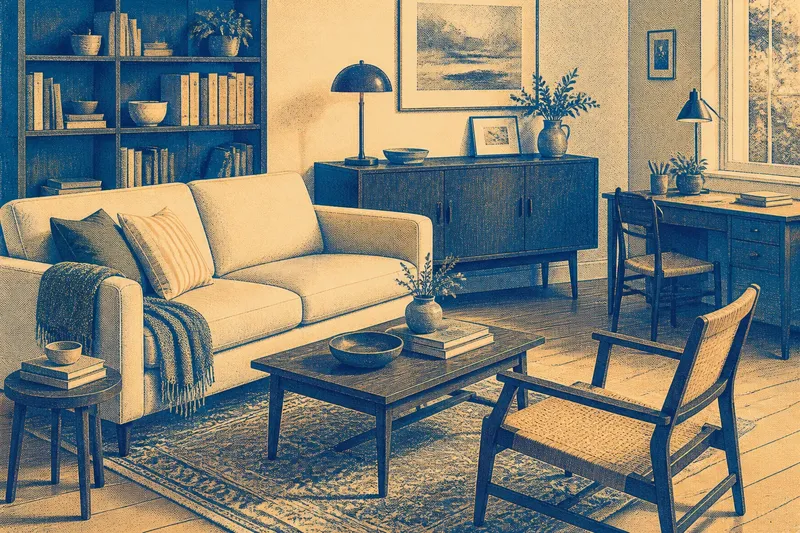
Does matching furniture need to arrive together to look right? No. A room can feel considered when its pieces make sense beside one another, even if they came from different places and periods. A matching set makes choices easy, but it can also make a room look as if it was furnished in one catalog order.
Matching furniture and scale
Start by comparing visual weight, not just dimensions. A broad, low sofa can hold its own beside a substantial coffee table. A spindly side table may look tentative beside that same sofa, even if the finishes match.
Consider height, width, and how much of each piece appears solid. A tall bookcase can balance a low cabinet elsewhere in the room. The pieces need not share a silhouette, but their scale should feel plausible together. Leave room for drawers to open and chairs to move; matching finishes cannot fix a cramped layout.
Say you have a compact walnut desk and want to add a chair. A large upholstered armchair would crowd the desk and block its drawers. You choose a smaller chair with a dark frame and a woven seat instead. The expected result is a usable corner where the desk and chair differ, but neither overwhelms the other.
Repeat a useful detail
A repeated detail can connect pieces without making them look like members of one family. Pick something precise: rounded corners, tapered legs, woven cane, or a particular metal finish. A detail that appears on a lamp and a cabinet pull can register as a small deliberate choice. Repeating it on every surface risks making the room feel prescribed.
Look at the furniture already in the room before shopping. A dining table’s leg shape might reappear in an occasional chair. A cabinet pull may share a finish with a lamp base. These are modest links, not a scheme that every object must obey.
Keep the detail specific. “Wood” is too broad to give much direction; a visible oak grain or a dark stain is easier to compare. The goal is not to make every wooden surface identical. A clear point of resemblance is enough, while differences in age, use, or construction keep each piece distinct.
Choose finishes deliberately
Different finishes can coexist without relying on repeated color or material. Consider the furniture’s practical character: a painted cabinet may feel formal, while a plainly built table may feel workmanlike. A chair with a sculptural back can give the group a different presence. These contrasts can make the room feel collected, provided each item has a reason to be there.
Before choosing paint, stain, or upholstery, view a sample in the room. Daylight, warm bulbs, and wall color can alter how a finish appears. Compare the sample with the furniture it will sit beside, rather than trusting a product image on a bright screen.
If one finish feels like an outlier, ask whether the piece earns its place through use or character. A brass lamp does not need a matching parade of brass accessories to justify itself. Buying extra objects solely to explain one purchase is a reliable way to clutter a room.
Which matching furniture questions matter?
Can different wood tones work together?
Yes, if the pieces feel suitable in scale and appearance beside each other. Put samples next to the furniture in the room and compare them in the light where they will be used.
How many details should repeat?
Use a small number of recognizable connections, such as a recurring leg shape or metal finish. If every piece shares several features, the room may look as coordinated as a complete set.
Should a dining table and chairs match?
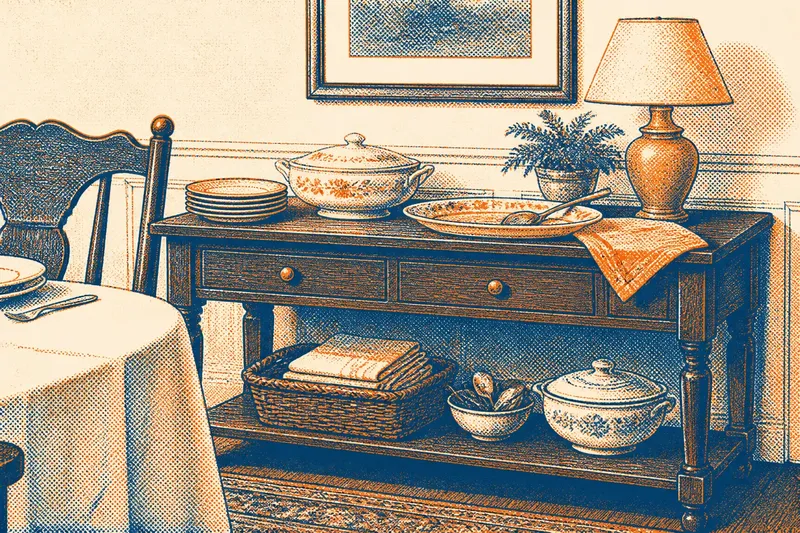
No, but the chairs should fit the table and work comfortably around it. A difference in upholstery or back shape can give the group character without making the chairs feel misplaced.
Shop for a real role
Begin with what the piece needs to do. A side table needs a useful top and a stable place beside a seat; a cabinet needs to hold the things you intend to store. Then check that its size and shape suit the room. This keeps appearance from outranking ordinary usefulness.
Secondhand shops and local listings offer individual pieces rather than a prescribed set. Bring a phone photo of the room and note the nearby furniture. Check drawers, joints, and surfaces in person. A charming shape loses some charm if its drawer sticks every time it opens.
For new furniture, judge the individual item against what you own. Retail photographs often show a full collection under controlled lighting. The useful question is whether this piece suits your room, not whether its official companions are also available.
- Check whether the piece has a clear use; if it does, compare its size with the space, then consider it, but if it has no role, leave it behind.
- Check whether drawers and doors can open without hitting nearby furniture; if they can, keep the proposed placement, but if they cannot, choose another position or a different piece.
- Check whether a chair leaves room to move around the table; if it does, assess its shape and finish, but if it obstructs the path, look for a smaller chair or change the layout.
- Check whether the new finish looks acceptable beside the existing furniture in the room’s light; if it does, keep it on the shortlist, but if it clashes in a way you dislike, choose another finish.
- Check whether a repeated detail appears naturally elsewhere; if it does, let that be the connection, but if it requires buying extra objects, reconsider the original piece.
- Check whether the room still has open floor or a quiet surface after the addition; if it does, the arrangement may remain legible, but if it feels crowded, remove or relocate something before buying.
Leave room for difference
A collected room does not need every surface filled. Leave a plain wall, an open patch of floor, or a simple textile where the eye can rest. Empty space is not a shopping list with a delayed delivery date.
Before adding a piece, move a chair or lamp into the proposed spot and look from the doorway and your usual seat. If it interrupts circulation or obscures furniture you value, reconsider its size or position.
Matching furniture is optional; a room’s usefulness is not. When you search for matching furniture, look beyond the set and ask whether the next piece fits the job, the available space, and the things you already own. A room can feel settled through its own practical logic, without making every object repeat the same design cue.